JS-Kit Comments

Showing posts with label animals. Show all posts

Flex Your Mussels

>> Thursday, September 12, 2013

Epioblasma raniana
Freshwater mussels play a vital role in aquatic ecosystems. They are amazing filters and are capable- in tight clusters- of filtering as much water as a treatment plant. It's no wonder why researchers working with the Illinois Natural History Survey, a division of the University of Illinois, have been working so hard to save two endangered species or mussel.

They moved individuals of the two endangered species- the northern riffle shell (Epioblasma rangiana)and the clubshell (Pleurobema clava)- from the Allgheny River in Pennsylvania to another area in the Ohio River Basin in Illinois. The species hadn't been seen in this area in about 100 years and have been transplanted with an 80% success rate. The area they were moved from was a site due for bridge restoration which would have greatly impacted the already dwindling numbers of these mussels.

You can read more at the University of Illinois site here.

Read more...

This Week in Science

>> Thursday, March 21, 2013

This has been an exciting week in science! I know what you're thinking, so were a LOT of other weeks... where have you been? I have had things to deal with. If you read Roogoodoo at all, you may know what some of those are.... anyway. On to the science news!

  • In space related news, Jeff Bezos (a.k.a. that billionaire guy from Amazon.com), funded the recovery of the Apollo 11 rockets from their longtime home in the bottom of the ocean. For those that somehow don't recall, this was the mission and shuttle that landed the first humans on the moon.
  • Stingray behavior is changeable. A study published in PLoS ONE noted the way rays at the infamous Stingray city in the Caymans acted compared to their non-human-fed counterparts.
  • You're a cheater! Don't believe me? Well, a study has proven it... sort of. Our brains are cheaters when it comes to remembering social ties and relationships. You can read more about your cheating mind here.
  • Lastly, in tech news, Apple wants Siri to take over the world. They may not want it to be as malicious as Pinky and the Brain may have wanted it, but they do want her voice to be your companion. From everyday tasks in your home, to the voice of your entertainment center, Apple plans on taking her places

That's it for highlights. Keep stirring up knowledge!

Photo from Absolute Divers.


Read more...

Largest known crocodile could swallow a human

>> Saturday, May 5, 2012

Largest known crocodile could swallow a human

This croc once lived in East Africa and is the largest known true crocodile. It is believed to have exceeded 27 feet in length, according to University of Iowa researchers. Read more at the link above.

Read more...

Penguins from Space!!!

>> Friday, April 13, 2012


It appears that there are way more emperor penguins in Antarctica than originally thought. In an article originally published in PLoSONE, a survey done using a Very High Resolution (VHR) satellite revealed that there may be twice as many penguins as originally thought. 

Because the penguins' black color stands out so visibly against the snow, they were easily spotted via satellite. Viewing from space allowed researchers to analyze 44 coastal colonies in Antarctica. You can read more about viewing penguins from space here.

An Emperor Penguin Population Estimate: The First Global, Synoptic Survey of a Species from Space


Read more...

New Mammals Discovered

>> Tuesday, June 21, 2011


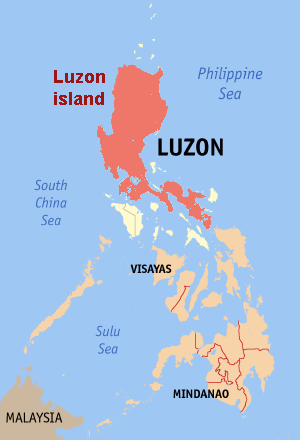
Here we are: in the Philippines, again. Luzon, again. Like last time, we are finding more critters, too! This time, seven species of mammal. Mice. All very genetically different; some only found on ONE mountain. This increased the number of known mammals (excluding bats) from 42 to 49. They increased mammalian integration by 17%!

Where were these mice all this time? Apparently they are very shy and liked to hide. They aren't pests and prefer to eat earthworms and bugs and seeds.

A Dr. Scott Steppan, head of one of the labs conduction the DNA part of the survey, said,
"The Philippines is an ideal place to study the evolution of animal diversity, even better than the famous Galapagos Islands. These animals have been evolving in the Philippine archipelago for millions of years."
Do you think we, as humans, have made the mistake of assuming a place like Panama is a biodiversity hotspot because it actually is, or is it because that is where everyone does research?

Read more...

Earth Week!

>> Saturday, April 16, 2011

Baobab, Adansonia sp.
We here at Potspoon! get a little excited about things like Earth Day. It's the little things. So to celebrate, we are posting tips all week long on easy ways you can go blue (or green, even though Earth is predominately water). We are turning it into Earth WEEK! The tips will all be way that you can go evironmentally concious without a drastic lifestyle change or without breaking the bank.. Feel free to post your simple tips on the wall of our Facebook page or Tweet them to us @Potspooners. For right now, some pictures of the amazing species that live on Earth, via Wikimedia Commons.
Rose-tip anemone Condylactis gigantea

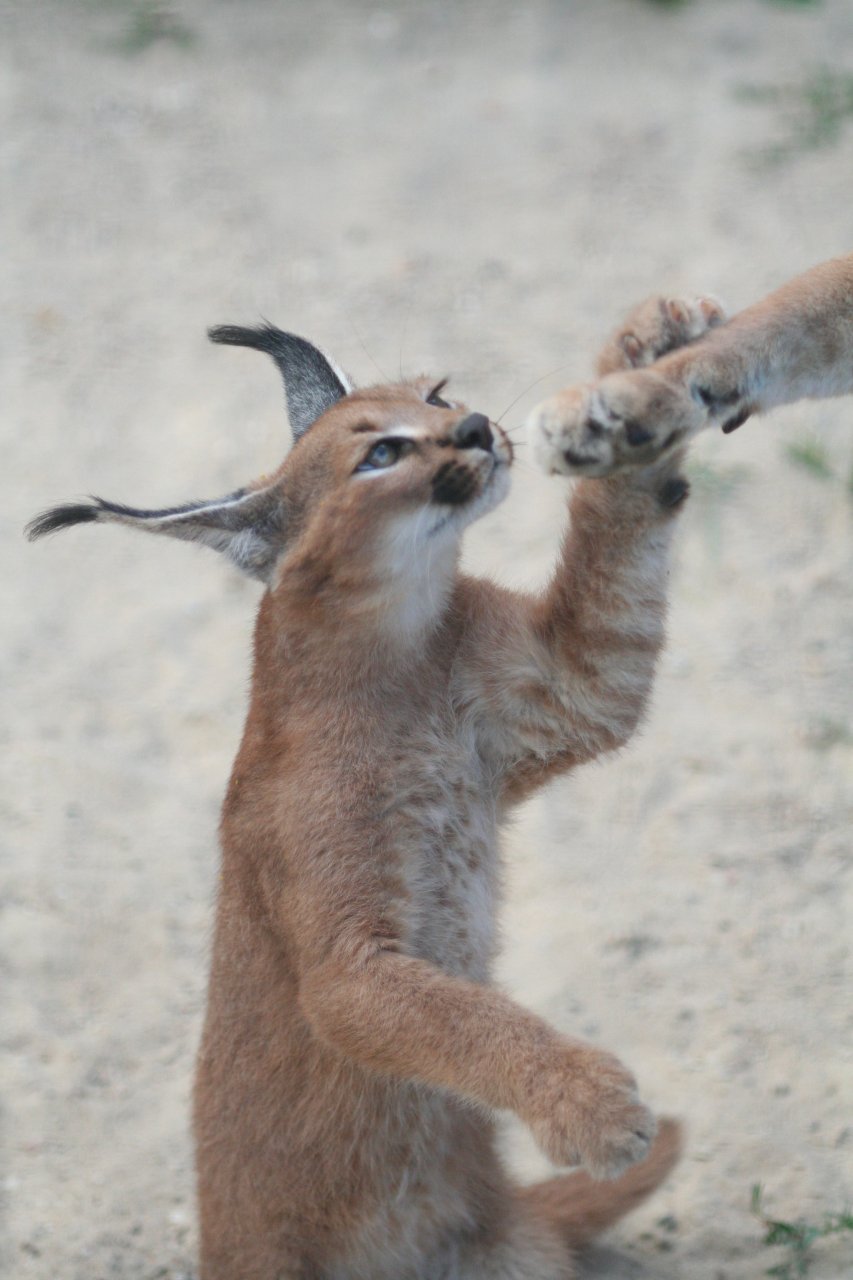
Caracal Caracal caracal
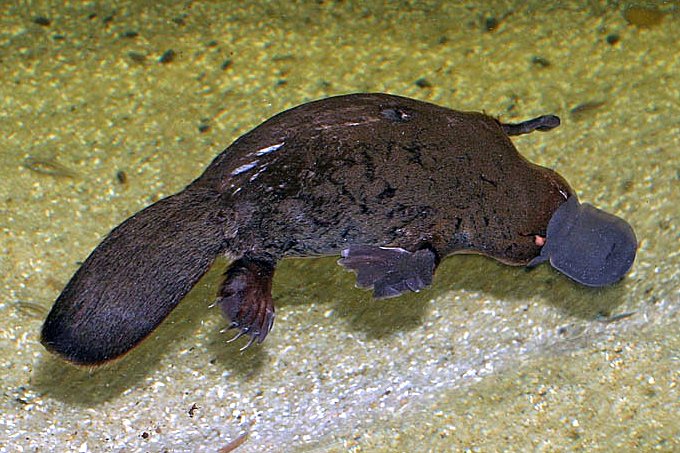
Platypus Ornithorhynchus anatinus

Emperor shrimp Periclimenes imperator


Read more...

Science Updates

>> Sunday, November 14, 2010

Wow! There actually has been a lot going on in the world and I've mainly been posting links to articles on the Potspoon! Fan Page just to save on time, but I may as well write up some snippets here. We have quite a bit of a range of science stories to cover but I am only putting up a few with links so you can explore on your own.


  • Paleontologist finally believe they have identified the oldest known dinosaur embryos. The embryos belong to genus Massospondylus and are believed to be about 190 million years old. The embryos have over sized heads much in the way that many modern vertebrates do. This would mean that this dinosaur may have needed some parental care early on making it the earliest parental care evidence.

  • In a story that has be written up in a few of my favorite online sources for science news, cats' balance even extends to how they drink. Using the inertia of the moving liquid, they actually quite delicately suck the liquid up in a column and close their mouths before gravity kicks in and makes the liquid fall again. This minimizes spills and messes.

  • IBM unveiled their plans to make super small processors for the worlds most powerful supercomputers. The processors, according to this article from the BBC, would shrink them to about the size of a sugar cube.

  • If you like watching the skies for auroras, tonight and tomorrow may be perfect for you. A closely watched sunspot, 1123 to be exact, recently sent a "blast" of filaments towards earth and we should be receiving a magnetic glancing blow tonight and tomorrow. Should be quite a show.
Well, that's it for now, folks. I hope you have an awesome week!

Read more...

Heammerhead Shark Info

>> Friday, May 7, 2010

Hammerhead sharks are probably one of the most curious looking of the sharks out there. They are pretty distinctive and hard to mistake for something else. What got me on the idea to write about these interesting guys was a study done recently by the University of Bath that focused on how a shark's amazing sense of smell works. To determine this, they used hammerheads and completely mapped out how sharks can smell.


There have also been more studies done regarding hammerhead sight. It used to be thought that the unique shape of their heads aided in agility. More recently, however, it was determined that the placement of their eyes gives them incredible depth perception. Hammerhead species have the best vision of all the sharks, by a lot.

There are only nine species of hammerhead ranging in size from 3 feet to 20 feet. All of them are in the genus Sphyrna and two of them are critically endangered. They are found in tropical waters throughout the world. Some species are solitary and others can congregate in schools of thousands. They are not usually considered a threatening shark and generally even considered safe for open water dives.

If you have any questions, let me know.


Picture found via Creative Commons.

Read more...

Large Creatures in Hiding

>> Sunday, April 11, 2010

I am sure cryptozoologists everywhere are having a field day with this as evidence of the ability of larger animals like the elusive bigfoot to remain in hiding. It has been confirmed that a new species of lizard, namely Varanus bitatawa, was discovered living in the treetops on the Philippine island of Luzon. The lizard can reach lengths of up to two meters in length (approx 6 ft) and has eluded scientists all this time. The lizard, a type of monitor lizard and closely related to the monitor lizard, is a vegetarian.


The lizard was first brought to scientists attention in 2001 when hunters went by with a large monitor lizard that they were only permitted to photograph. This spurred a two month expedition last summer. The hunt was successful and DNA testing revealed that this is, in fact, an entirely new species. What makes the find even more unique is that Luzon is a highly populated island and has suffered severe deforestation. Local hunters have always seen the lizard as a delicacy, but due to the small number of surveys done in this part of the world, the lizard had been unclassified by science.

The team from the University of Kansas was lead by herpetologist Rafe Brown. You can read more at National Geographic and ScienceNews.


Read more...

Seeing Stars!

>> Sunday, March 21, 2010


I realized that after doing a few Name That Creature posts on Facebook that I should really make sure many of the creatures featured have a post on Potspoon! to make it easier to look up. First on this list of creatures I have skipped is the reticulated sea star or the cushion star, Oreaster reticulatus. Adults get beautiful reds, browns, and yellows that are striking and easy to spot while snorkeling or diving. They can also reach sizes of 50 cm (almost 20 inches).


This sea star is very common in the western Atlantic and is a very visible creature in sea grass beds throughout the Caribbean. Since they spend much of their lives in sea grass beds, the juveniles are green in color to blend in with their surroundings. They rarely hang out in deeper waters. Here in the Virgin Islands you will find them amongst the Thalassia testudinum beds. If you recall, T. testudinum is referred to as turtle grass and is also where you commonly find our friend the queen conch.

Hanging out in these turtle grass beds allows them a diverse diet consisting mainly of sea sponges that wash in from reefs and various forms of mollusks. To eat, they actually put their stomachs out of their "mouth" then digest partially what they are consuming. When ready, they suck their stomachs back inside!

Like is the norm for echinoderms (although exceptions always seem to pop up), they use a water vascular system for structure and to use the tube feet they move around with. Believe it or not, these guys are related to urchins and sea cucumbers! There are many reasons how, but perhaps we will save that for another post!

Now you know a basic rundown of the amazing cushion (or reticulated depending on where you get your info) sea star. Feel free to leave any questions in the comments!


Read more...

Debate!: Animals in Captivity

>> Friday, February 26, 2010

In the wake of yesterdays bombardment of the news of an orca attack on a trainer at SeaWorld, Orlando, the conversation came up many times about the purpose of keeping these large mammals in captivity. While animals have been held in captivity for thousands of years for the simple sake of enjoyment, showcase, and pride of ownership, many a conversation has been had about the reasoning behind this. This sort of thing is perfect for the now rare and occasional Debate! series.

Too many times, the presence of non-native wildlife in an area, no matter how contained the plants or animals may be, the organisms end up becoming invasives and manage a way into the wildlife in the surrounding areas. This destroys the biodiversity in many areas and since this is the Year of Biodiversity, an appropriate debate as well. That is what happened, if you recall, with the Vervet monkeys in St. Kitts. There is also a very serious problem with invasive lionfish in the Caribbean. There is even a bounty out for these guys. The lionfish ended up in these waters as wayward pets. People buy exotic animals and instead of properly disposing of, selling, whatever, they release these animals into the wild. Now the lionfish is destroying reef systems simply by not having any natural predators. We'll get into that later, though.

On a larger scale, however, killer whales (Orcinus orca) and other dolphins are not your average pets. Many of these animals start out as rescue animals or are bred in captivity. The rescue animals, such as those found at the Clearwater Marine Aquarium, are rehabilitated for release. Many of the seriously injured ones, like Winter, would never make it being re-released in the wild so they are used for educational purposes. Many of these amazing mammals, however, actually are captured for use in entertainment shows, suffer various pathologies, and have a decreased life expectancy.

So, dear readers, on what side of the argument do you weigh in on here? People do die of pig related accidents all the time, and this was a bit of a freak incident, but should animals of this nature be held captive? There are a lot of angles one can take here, so happy debating!


Read more...

Kids Planet

>> Friday, February 12, 2010

To add to the list of appropriate science sites for children (I should just do a compilation, but another day perhaps), I found out about a Defenders of Wildlife site created for children and teachers. It's called Kids Planet and is full of facts on endangered species, games, a teaching curriculum, coloring pages and more.

The site is pretty easy and seems like a great tool to introduce your kiddies to wildlife. There is even a page that explains ways even children can make a difference in the protection of our planet's animals.

Happy surfing!


Read more...

Tiger Tales

>> Thursday, February 11, 2010


In Eastern zodiac, 2010 is the year of the tiger (not to be confused with UN's Year of Biodiversity). To celebrate this, the WWF has set up a few educational things to teach people about this greatly endangered animal. Since I wrote my first post about tigers, the number of tigers in the wild has gone down by almost half. Pretty scary.

On the WWF tiger site, you will find lots of information about the animal itself, what problems this creature faces, different sub-species, why they are important, and more. They even created a "trouble-spots" map with information on why everyone is involved with the destruction of these creatures. Go check it out to find out the many ways you can help.


Image from Tambako the Jaguar's Flickr photostream and is licensed under creative commons.


Read more...

Reindeer Games

>> Saturday, December 19, 2009


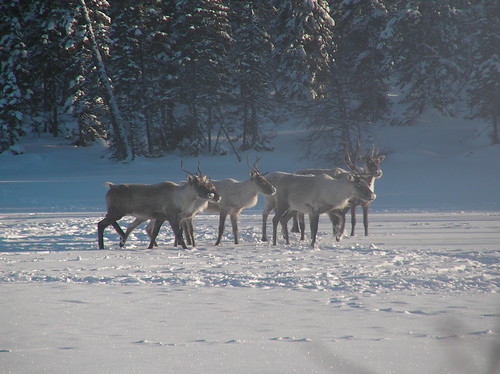
Since it's the winter holiday season (and I haven't written about much else in a while), we are going to talk about an animal that for some reason has become closely associated with this time of year: the reindeer. The reindeer (Rangifer tarandus) is also known as a caribou. They live in areas all over the world nearest the Arctic circle. The bull or male caribou can weigh up to 700 lbs. while the female is smaller and can reach weights of 350 lbs. In North America, usually only the domesticated ones are still called reindeer and in the wild are known as caribou.

Caribou are members of the deer family but are the only member in which males and females both grow antlers. Females in good health can breed at 16 months and calving usually occurs from May to June. They will usually have one calf per year.

Due to the harsh environs these animals live in, they must migrate great areas to maintain an adequate supply of food. They will eat lots of things from various shrubs to lichens and more. The males will lose their coats in about August marking the start of this migratory and breeding season. Herds of caribou have differences in ranges of about 400 miles between summer and winter. They do not fly. :D

Happy holidays!

Photo from peupleloups photostream on Flickr and is licensed under Creative Commons.


Read more...

Chimp Culture

>> Monday, October 26, 2009


Our lovely cousins, the chimpanzees, have been in the news a bit recently. One article, however, really caught my eye. Researchers studying neighboring chimpanzee populations in Uganda found that different groups approached similar problems with different tools.

The problem was getting honey from inside a log. One group from Kibale Forest used sticks to get at the honey. A group from Budongo Forest used leaf sponges- absorbent wedges made from chewed up leaves. One scientist said the following as explanation:


The most reasonable explanation for this difference in tool use was that chimpanzees resorted to preexisting cultural knowledge in trying to solve the novel task. Culture, in other words, helped them in dealing with a novel problem.

Here, keep in mind, they use a really simple to understand basis of culture. Webster's defines culture as:

1. the ideas, customs, skills, arts, etc. of a people or group, that are transferred, communicated, or passed along, as in or to succeeding generations
2. such ideas, customs, etc. of a particular people or group in a particular period; civilization
3. the particular people or group having such ideas, customs, etc.
Using this definition, it's easy to see why we can relate the use of certain tools (a skill passed down through generations) as a cultural difference. You can read more about the experiment here.

Photo from
Don't forget: The Donor's Choose Challenge is going on 'til the end of October. Make a difference in school children's lives.


Read more...

Island Dogs

>> Friday, October 16, 2009


Today's post was inspired by a comment on SeaLaura's recent post. A commenter mentioned a dog beach on an island. Since many people don't know too much about it, I figured I would clue you all in...

The one that has made news in the past is nicknamed Dead Dog Beach. The beach is located in Yabucoa, Puerto Rico. There are many "dog beaches" throughout the Caribbean. Now, when we say dog beach, we do not mean dog-friendly beaches that you can take your pet. These are beaches that have large populations of strays living on or near them. Now, back to Puerto Rico. The reason it is called Dead Dog Beach is not for the faint of heart. Many of the animals are tortured or beaten regularly by local residents. An organization known as Island Dog is aiming to teach the people in this area that animal cruelty is not okay. They also provide other services for the animals like bringing food and fresh water, providing medications, and spaying/neutering.

Needless to say, the program has grown considerably and they have reached out to many other dog beaches in Puerto Rico and the US Virgin Islands. One of the programs allows people flying on American Airlines to certain destinations check a pet. Once they arrive at the destination, partnering shelters will pick up the animal at the airport. All you have to do is check the animal. You can find out more ways to get involved here.

As you know, adopting animals is very near to my heart. If you are a new reader, the photo above is of my doggy, Floyd. She was abandoned and is what we locals refer to as a coconut retriever. She has been a part of my family for three years now and I wouldn't have it any other way. If you know anyone who is traveling to the Caribbean, see if the flights coincide with Island Dog's pick up centers. You can make a big difference.

Don't forget: The Donor's Choose Challenge is going on 'til the end of October. Make a difference in school children's lives.


Read more...

Flamingo Tongue

>> Wednesday, October 14, 2009


Now that I am all well rested from my "staycation" I have lots of pictures and science-y tidbits to share. This amazing photo my hubby took above is of a flamingo tongue (Cyphoma gibbosum). See the brightly colored shell on the sea fan? It's that. Now you will get to learn a little about this amazing creature.

Habitat:
This beautiful snail lives its life hanging around on gorgonian type corals. These commonly are sea fans and sea whips. They are found in shallow waters to depths of about 10m (30 ft.). Its range is the southern Atlantic and Caribbean. This is the area between North Carolina and Brazil.

Family Origins:
This colorful little guy is a gastropod. That means he is a mollusk along with some of our friends the squids, snails, and slugs. They are part of the family that is commonly known as the cowries.

Fun Facts:

  • The colors on the shell are not actually on the shell. It is actually a layer of tissue outside of the shell. Once the snail dies, it is really just a plain white or light peach colored shell.
  • They cannot survive without coral reefs. They live on and feed off gorgonians (octocorals). Both the flamingo tongue and the coral they feed on are invertebrates.
  • Like all gastropods, the flamingo tongue eats with its foot. The thing any snail crawls along the surface with is known as it's foot. They eat as they are moving!
  • They have very few predators because, as the brightly colored shell indicates, they are distasteful.
  • The maximum size is only 1.5 inches.
  • They are diurnal (sleep at night) just like us! Well, most of us. :D
  • Flamingo tongues are getting more rare as visitors to the Caribbean mistakenly snatch them up for their colorful shells. Now that you all know they aren't really colorful, you won't take them, will you?
I hope you have enjoyed this introduction to yet another animal found here in St. Thomas.

Don't forget: The Donor's Choose Challenge is going on 'til the end of October. Make a difference in school children's lives.


Read more...

Wolves, Birds, and Other Animal News

>> Sunday, September 13, 2009


It has been a busy week for animals so lets get to it.

  • The gray wolf (Canis lupus) is not making it easy on hunters in Idaho. This year, the state of Idaho sanctioned a wolf hunt and issued 14,000 wolf hunting permits. This large number of permits is despite the fact that the population of the wolves is only estimated at less than 900. In the first 11 days of the hunt, only three wolves have been tagged (legal kills). Montana is due to start their wolf hunting season (population is only 500 there) this week. There are talks occurring as to whether or not the gray wolf should be on the endangered species list again.
  • A missing bird was found flying at sea. This is not the booby I mentioned last time. This time it is the Fiji petrel. The bird is incredibly rare and only through a very thorough bird "hunt" were researchers finally able to see them. The only known specimen was an immature one from Gau, Fiji in1855. It wasn't until 1984 that the bird had a confirmed sighting again. You can read more about this elusive bird here.
  • Honeybees are telling ants to "buzz off" quite effectively. For the first time on tape, a bee has been caught using its wings to blow away ants that are attacking them and their nests. The bees actually change their wing beat pattern to one far more powerful and aggressive to blow the ants away.
  • A few new species have been found inside a crater in Papua New Guinea. Among them were various species of amphibians, plants, and one of the world's largest rats. Mount Bosavi crater was the subject of a recent expedition set up by the BBC. Most of these new species are believed to not exist anywhere else on Earth!
  • This last snippet is a bit of local news. Recently, I wrote about turtle nesting in the VI. Well, as luck would have it, Brewers Bay (the location of my opening credits for many Potspoon! videos) has a turtle nest! Not just any turtle nest either. I have lost of luck spotting green turtles at this beach, but the nest is a leatherback nest! Leatherbacks are the fourth largest reptilian species behind three crocodilians. They are endangered worldwide. The picture above is said nest. I am so excited!
That's it for your animal news snippets.

Read more...

Are you Certifiable?

>> Friday, September 11, 2009


Aw, come on! I don't mean it like that! I mean your backyard. I know a few of my readers have a lot of visitors in their yards and that is just what the National Wildlife Federation is looking for. NWF is having a drive to certify 150,000 yards this weekend. As an added incentive, by applying for certification you get:

  • A personalized certificate that recognizes your NWF Certified Wildlife Habitat™.
  • A free NWF membership which includes a full year's subscription to the award-winning National Wildlife® magazine and 10% off all NWF catalog purchases.
  • A free subscription to the quarterly e-newsletter, Habitats, full of insightful tips and information on gardening and attracting wildlife year after year.
  • Your name listed in NWF's National registry of certified habitats...to recognize all you've done for wildlife.
There are some requirements you will need to fulfill to make sure your backyard or garden is eligible so visit the Garden for Wildlife page to find out more. The page is also full of information on how to start a wildlife garden. It would be a great way to commemorate National Day of Service and Remembrance by providing habitat for many animals that are so threatened and by helping to beautify your neighborhood.


Read more...

A Birds Return From Extinction

>> Wednesday, September 9, 2009

Photograph by Paul Nicklen for National Geographic

There is a bird that has been considered extinct for a while is back. Don't worry. They didn't come back as zombies or undead minions of some sort. It was actually just a bizarre case of mistaken identity.

The Tasman booby had been considered extinct since the 1700's when sailors consumed what was thought to be the last colony of these birds. Many scientists thought that the Tasman booby and the masked booby were closely related, but it wasn't until recently that they were proven to be one and the same. Besides a bone study, they also studied the DNA and found a perfect match! Masked boobies are on the threatened species list so hopefully now we can save them from a second extinction. :D I'm just glad they weren't really zombies!

You can read more here.


Read more...
Related Posts with Thumbnails
WARD'S is a one stop online store for science education.
CommentLuv Enabled Charles Darwin Has A Posse Science Blogs - Blog Catalog Blog Directory Blog Directory by Blog Flux

  © Blogger templates Palm by Ourblogtemplates.com 2008

Back to TOP