JS-Kit Comments

Showing posts with label biology. Show all posts

New Mammals Discovered

>> Tuesday, June 21, 2011
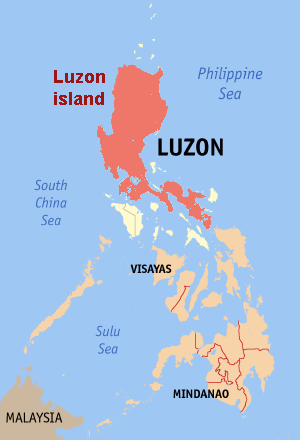

Here we are: in the Philippines, again. Luzon, again. Like last time, we are finding more critters, too! This time, seven species of mammal. Mice. All very genetically different; some only found on ONE mountain. This increased the number of known mammals (excluding bats) from 42 to 49. They increased mammalian integration by 17%!

Where were these mice all this time? Apparently they are very shy and liked to hide. They aren't pests and prefer to eat earthworms and bugs and seeds.

A Dr. Scott Steppan, head of one of the labs conduction the DNA part of the survey, said,
"The Philippines is an ideal place to study the evolution of animal diversity, even better than the famous Galapagos Islands. These animals have been evolving in the Philippine archipelago for millions of years."
Do you think we, as humans, have made the mistake of assuming a place like Panama is a biodiversity hotspot because it actually is, or is it because that is where everyone does research?

Read more...

Large Creatures in Hiding

>> Sunday, April 11, 2010

I am sure cryptozoologists everywhere are having a field day with this as evidence of the ability of larger animals like the elusive bigfoot to remain in hiding. It has been confirmed that a new species of lizard, namely Varanus bitatawa, was discovered living in the treetops on the Philippine island of Luzon. The lizard can reach lengths of up to two meters in length (approx 6 ft) and has eluded scientists all this time. The lizard, a type of monitor lizard and closely related to the monitor lizard, is a vegetarian.


The lizard was first brought to scientists attention in 2001 when hunters went by with a large monitor lizard that they were only permitted to photograph. This spurred a two month expedition last summer. The hunt was successful and DNA testing revealed that this is, in fact, an entirely new species. What makes the find even more unique is that Luzon is a highly populated island and has suffered severe deforestation. Local hunters have always seen the lizard as a delicacy, but due to the small number of surveys done in this part of the world, the lizard had been unclassified by science.

The team from the University of Kansas was lead by herpetologist Rafe Brown. You can read more at National Geographic and ScienceNews.


Read more...

African Elephant Migrations

>> Tuesday, December 9, 2008


African Elephant
Originally uploaded by Lukas Vermeer
In an interesting article I found while stumbling around PLoS, I learned that elephants (Loxodonta africana) have very distinct migratory patterns. The study was conducted over five years and used GPS satellite tracking to follow a cow and her daily movements.

The study, by Holland, Thomas and Minot, followed the elephant from her summer home in Kruger National Park (KNP)and Sabi Sands Game Reserve (SSR) in South Africa. In the study, they found that the elephant (and therefore the herd) moved at speeds that corresponded with the temperature. Also, the elephants had the tendency to use the the exact geographic areas as home bases. The elephants actually migrated seasonally. The summer range for the herd was actually four times larger than their winter stomping grounds but that did not deter them. The use of a larger area in the summer in KNP was for better grazing. The area in winter, SSR, had good grazing and water in a smaller area.

The animals also showed distinct wildlife corridors and remained close to water and did not use "random" movements or trails. This was the first study of its kind done for this long. Knowing where these corridors are will help better protect these amazing creatures during their migrations.

You can find the original article here.

Photo licensed under Creative Commons.

African Elephant
Originally uploaded by Lukas Vermeer


Read more...

General Science Thingies

>> Sunday, November 23, 2008

I really enjoyed doing my Animal News Snippets and other posts in that style. It really allows me to sum up some amazing things without having to spend all day on the computer! So without further ado, here is your update on general science (pretty much all kinds, not just animals like last time).

  • Bahamas- Researchers from the University of Texas at Austin found a very large (grape-sized) single celled organism leaving trails. They had found similar single-celled organisms in the Arabian Sea, but they didn't move. These have definite trails behind them and the trails look like early fossilized trails. For a long time, scientists believed the fossilized trails were made by a multi-cellular organism.
  • Antarctica- High energy electrons have been captured. Scientists believe the findings may help with theories on the elusive "dark-matter." This topic is very complicated so that is all I will leave you with. It hurts my head typing it. :D
  • U.K.- A bird of prey that all but disappeared early last century will be reintroduced in England. The sea eagle is the U.K.'s largest bird of prey and if all goes as planned, they will be reintroduced in Norfolk next summer.
  • Italy- Puppy smuggling is a growing concern in Rome, where a conference was held to face the challenges of this illegal industry. Poor puppies!
  • World- Max Planck Institute of Neurobiology finds that contacts between new cells when we learn stay in place. That means that we never really forget anything. The brain reactivates these contacts when you are being taught these things again (refresher courses), making the knowledge a bit better.
  • California- Researchers at the University of California, Berkley, found that learning the name of a color changes the part of the brain used in perception. Toddlers, for example, use the right half of the brain for color. After learning the name of the color, this perception and awareness switches to the left hemisphere.
If there is anything you guys really want to learn about, feel free to email me at moya [dot] marizela {at} gmail [dot] com. I welcome all comments and critiques! I guess I just want to know what I can do better. I hope you enjoyed your science news!


Picture of the Sea Eagle is in the Public Domain.

Read more...

The Easiest Way to Burn Fat!

>> Saturday, October 4, 2008

... is apparently to do nothing.

In a recent study, mice that were given high fat diets but kept pretty sedentary were less likely to become obese than their very active, also over fed counterparts. Here is a quote from Nerdy Science Blog explaining:
In order to maintain body temperature, warm-blooded animals, including humans, continuously burn fat. It is believed that by burning more fats, people are less likely to become obese. Leslie Kozak and colleagues at Pennington Biomedical Research Center challenged this prevailing thought showing that burning less fat actually reduces the risk of obesity.

There is a lot more to this, including certain genes involved, but this is the gist: if you stay cool (i.e. don't move around) your body works hard to keep it's temperature up, thus, burning more fat. Sounds easy to me... now whether this actually works... we'll see. You can find out more at The Journal for Biological Chemistry.


Photo is Public Domain and can be found here.

Read more...

Iguana Drive You Crazy!

>> Wednesday, September 17, 2008


Since I don't even want to think of my stupid exam today, but I do need to teach (yes need... it's a compulsion) something, we are gonna talk about the pretty little guy (or girl?) that was in my post last time, the green iguana.

Like I previously mentioned, the scientific name is Iguana iguana and these guys are super common in the Caribbean and Central and South America. I am also pleased to announce that this guy holds the current record for being the largest lizard in the US.


Eating Habits:

Now I know these guys are really prehistoric looking and have GIANT CLAWS... but they won't bite you or eat bugs or any other protein (unless you feed it to them). They are herbivorous... you know, made to eat vegetation. They love bananas, old mangoes, and hibiscus flowers. This guy here is going after my papayas (right).

Habitat:

They love hanging out in high branches and soak up some sun. They are exothermic, meaning they can't regulate their own body heat like us so they love to bask. I don't blame them... the sun here is perfect for basking in!

Now this is all the information I am gonna give you because when I get enough footage for my iguana video, I do not want you to be bored! HAHA! That is what you call a free sample! I think I may be a bit manic today....

Creative Commons License
Iguana Make You Crazy! by Marizela Moya is licensed under a Creative Commons Attribution-Noncommercial-Share Alike 3.0 United States License.

Read more...

Debate! Designer Babies

>> Wednesday, September 3, 2008

I think I would like to do a weekly or bi-weekly discussion on this blog about controversial scientific issues. Of course, I will see how this goes over first. So now presenting this weeks debate!


The hubs and I were having a conversation last night about what fields of science I distrust the most and I told him biotech or bioengineering. I have many reasons for my distrust of these fields, one being the whole "designer baby" thing. I don't really believe in gene manipulation of any sort. I know that gene therapy can potentially help us avoid children with Duchenne dystrophy and things of the like, but even that I still have my qualms about. Maybe I am a bit alone in this aspect, but I think nature's way of human population control is disease. Biotechnology wants to extend our lifespans. We all have the longest lifespans in thousands of years, or ever depending on who you talk to, yet we want more. I don't think people realize the ramifications of living that long. That just means a HUGE increase in populations and more people to feed around the world. This also means, more waste, more consumption, more economic strain... I don't know. This is my opinion, remember. I also know that bioengineering has taught us about fermentation and DNA sampling. I can plays the Devil's Advocate for this as well. I do, however, want to hear your opinions on these topics. What do you like/dislike about bioengineering?

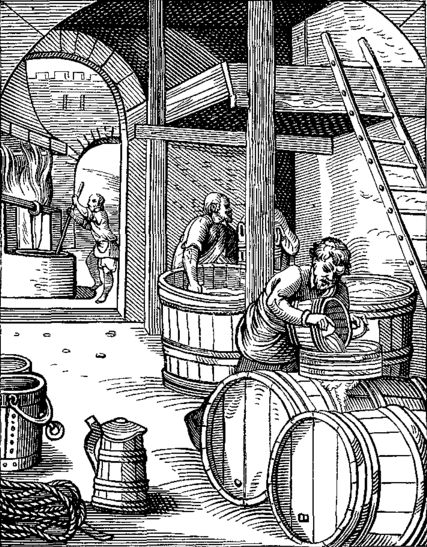
brewing is a form of biotechnology.

While no longer in print, The Impact of the Gene: From Mendel's Peas to Designer Babies is an excellent read on this topic.

Image from Wikimedia Commons

Read more...

The New Environmentally-Friendly (?!?!) Plastic

>> Wednesday, July 2, 2008


This photo is from the USDA and is therefore public domain.

There is a new plastic (well not that new) on the market and it's gaining popularity. This plastic is made from corn and touts its biodegradability. The material is polylactic acid and it has been known about for over a century. It is only now gaining popularity due to another wave (similar to the early 90's) of eco-consciousness.

While this new plastic does have a few things going for it (a renewable resource and, in principle, compostable) there are a few things a lot of people haven't really studied or answered.

The pros:
  • Regular plastics use an average of 200,000 barrels of oil a day to produce our demand
  • Corn is a renewable resource and the plants help offset the amount of carbon produced in the plastic's manufacture
  • Plastics take up 25% of dumps by volume
  • PLA (polylactic acid) is compostable within 3 months at a controlled composting facility
  • It costs less than $1.00 to make a pound of PLA (see here)
  • Generates less air pollution to make
The cons:
  • PLA takes much longer to compost in a bin or even in a landfill
  • There are only 113 controlled compost facilities nationwide... only a quarter of these facilities accept residential scraps
  • PLA must be kept separate from other plastics to keep it from tainting their recycling process
  • Estimates for this breaking down in landfills are anywhere between 100 and 1,000 years (see here)
  • Cannot survive temperatures of 114 degrees Fahrenheit
Possible cons (of the controversial type)
  • Made of highly genetically modified food
  • Is using a food product to make non-food stuffs while people are going hungry
  • Still supports single use and disposables still adding to landfills
So it seems that the pros and cons are evenly matched and there are some controversial issues that are brought up... but I guess at least it is a start in the right direction. At least there is a push for biodegradable containers.

The biggest manufacturer of PLA in North America is NatureWorks. Go check out the website and tell me what you think!

Read more...

Biodiversity continued...

>> Saturday, May 24, 2008

Many of the terms that were thrown around in the first post about biodiversity may have been a bit hard to understand. This post is going to break down the terminology used in ecology. So, in a way I guess this is more of an ecology post not a biodiversity post, I'm just cross referencing! Hopefully, this will lead to less confusion... not more.

So, starting at the broad and bringing it in a bit we will start with ecology: what is it and what do ecologists do all day? Well, ecology is— in the simplest of terms— the study of the relationships of organisms and their environments. I hope I'm not plagiarizing anyone there, but that is pretty much it. Now this includes all the relationships in an organisms environment: interactions with other organisms in the same species, other animals, plants, climactic changes, bacterium... all these interactions are what ecologists study.

There are a few different types of relationships that pretty much cover the bases of all the interactions. Relationships come in the following categories:

Mutualism- both sides of the relationship gain something
Commensalism- benefit for one and no effect on the other
Predation- this covers herbivory and parasitism as well. It is a gain for one and a loss for the other
Amensalism- negative for one and neutral for the other
Competition- negative for both parties
Neutralism- just what it sounds like— no effect on either

By studying these relationships you are also studying populations, genetics, global patterns, different biomes and more. As an ecologist, one must be a bit of a zoologist, botanist, geneticist, statistician, and writer. Not exactly an easy task.

I hope this gives everyone a better understanding of what ecology is. I will continue this series every now and again by breaking things up into pretty simple terminology (I hope). If you have any questions or want to know about a certain area of study (any topic is ok) just let us know!

If you want to find out more about ecology, there are tons of textbooks out there, but one I found really easy to follow was Ecology: concepts and applications by Manuel C. Molles, Jr.

Read more...

Seafood Watch

>> Friday, May 16, 2008

The Monterey Bay Aquarium has a unique program that I learned about by picking up a card at my university entitled "Seafood Watch." What I picked up was actually a pocket guide that allowed me to see which types of seafood were harvested in ways that can sustain each of their respective ecosystems. The website goes into more detail.

While protecting our oceans supply of fish may seem like an obvious thing to do for some, for others it is not so obvious. I am gonna try to give a short reasoning as to why fish are vital.

First off, there are about 27,000 species of fish, making up more than 1/2 of all documented vertebrates. Also, they live in water, which covers most of the earth. 70% of the earth is salt water and salt water makes up 97% of liquid water. Fresh water covers 1% of the earth but only .0093% of it is in liquid form. So fishes (yes that is a word) dominate a much larger region than terrestrial invertebrates. This makes them prime for various scientific studies as there are fish that can handle tons of pressure variations and various temperatures from boiling lakes to freezing icecaps. Yet because they all live in water, there are constraints to how they form so most fish are recognizable as fish.

If you are into science, more than likely some research on fish has been done in your area.
Areas of interests that fish can help with:
-Ecology
-fisheries
-habitat segregation
-marine natural products: venoms toxins and mucus
-Enzyme kinetics
-physiological adaptations
-food science
-how to freeze cells
-morphology
-hydrodynamics
-survival (lost at sea?)
-bioluminescence
-reproductive strategies

.... the list goes on and on so I will not bore you.

However(!), due to overfishing and unsound farming practices, we are either losing good land to bad farming or depleting fish supplies everywhere. Many people rely on fish as an important part of their diets. In some places it is THE MAIN source of vital protein. Overfishing can seriously impede the production of a species of fish the following year. You need fish to make more fish! There is a fine line between taking just enough to sustain it properly and overfishing. Unfortunately, greed usually wins.

Also, bad fish farming practices can lead to overfishing too, since most fish eat fish meal in these farms. Also, valuable, usually arable land is lost to create these farms. Net pen farming can be bad as well due to the amount of feces in an area polluting nearby coastlines. Again, there are safe farming practices that can be taken. There is more information on all of this at the above website. While you are there download a seafood guide for you wallet or order some to pass out to people you know who eat fish but want things to be a bit better for the oceans.


A view from Lerkenlund into Magens Bay

All photos Copyright me under Creative Commons. you can use it, but give me credit somewhere!

Read more...
Related Posts with Thumbnails
WARD'S is a one stop online store for science education.
CommentLuv Enabled Charles Darwin Has A Posse Science Blogs - Blog Catalog Blog Directory Blog Directory by Blog Flux

  © Blogger templates Palm by Ourblogtemplates.com 2008

Back to TOP