JS-Kit Comments

Showing posts with label oceans. Show all posts

Plastic found in nine percent of 'garbage patch' fishes

>> Saturday, July 2, 2011

ScienceDaily (2011-07-01) -- The first scientific results from an ambitious voyage led by a group of graduate students from Scripps Institution of Oceanography at UC San Diego offer a stark view of human pollution and its infiltration of an area of the ocean that has been labeled as the "Great Pacific Garbage Patch."

Read more here.

Credit: J. Leicther


Read more...

The Continuing Gulf Disaster: Part 2

>> Sunday, October 3, 2010


This video was posted October 1st. It comes in and out of the news occassionally, but the fact is, this disaster (while minimal compared to oil disasters on the coast of Africa) serves as a wake up call to us here.
Bookmark and Share

Read more...

More Oil Spill Info

>> Thursday, May 20, 2010

Since the mass media has decided this oil spill is not heavily newsworthy anymore, I will post what I can find. This video is done by Defenders of Wildlife and was filmed in Florida's J.N. "Ding" Darling National Wildlife Refuge. In it, she speaks of exactly what animals are going to be affected and how. There is a lot of very good information on this video.


Read more...

That Oil Spill Incident

>> Sunday, May 16, 2010

It isn't on the news as much anymore, which is a bit of a shame, but there is still a massive oil slick out in the Gulf and we've yes to see the full effects of what it can do. I remember as a kid getting tar stuck to my feet at the beach. I like having that NOT happen, thank you, so I appreciate what many agencies like the National Wildlife Federation are trying to do. The best thing you can do in situations like this is to educate the masses.


Oceana also has an entire page dedicated to this horrible disaster. Just because it isn't in the news you watch doesn't mean it isn't happening.


Read more...

Heammerhead Shark Info

>> Friday, May 7, 2010

Hammerhead sharks are probably one of the most curious looking of the sharks out there. They are pretty distinctive and hard to mistake for something else. What got me on the idea to write about these interesting guys was a study done recently by the University of Bath that focused on how a shark's amazing sense of smell works. To determine this, they used hammerheads and completely mapped out how sharks can smell.


There have also been more studies done regarding hammerhead sight. It used to be thought that the unique shape of their heads aided in agility. More recently, however, it was determined that the placement of their eyes gives them incredible depth perception. Hammerhead species have the best vision of all the sharks, by a lot.

There are only nine species of hammerhead ranging in size from 3 feet to 20 feet. All of them are in the genus Sphyrna and two of them are critically endangered. They are found in tropical waters throughout the world. Some species are solitary and others can congregate in schools of thousands. They are not usually considered a threatening shark and generally even considered safe for open water dives.

If you have any questions, let me know.


Picture found via Creative Commons.

Read more...

Seeing Stars!

>> Sunday, March 21, 2010


I realized that after doing a few Name That Creature posts on Facebook that I should really make sure many of the creatures featured have a post on Potspoon! to make it easier to look up. First on this list of creatures I have skipped is the reticulated sea star or the cushion star, Oreaster reticulatus. Adults get beautiful reds, browns, and yellows that are striking and easy to spot while snorkeling or diving. They can also reach sizes of 50 cm (almost 20 inches).


This sea star is very common in the western Atlantic and is a very visible creature in sea grass beds throughout the Caribbean. Since they spend much of their lives in sea grass beds, the juveniles are green in color to blend in with their surroundings. They rarely hang out in deeper waters. Here in the Virgin Islands you will find them amongst the Thalassia testudinum beds. If you recall, T. testudinum is referred to as turtle grass and is also where you commonly find our friend the queen conch.

Hanging out in these turtle grass beds allows them a diverse diet consisting mainly of sea sponges that wash in from reefs and various forms of mollusks. To eat, they actually put their stomachs out of their "mouth" then digest partially what they are consuming. When ready, they suck their stomachs back inside!

Like is the norm for echinoderms (although exceptions always seem to pop up), they use a water vascular system for structure and to use the tube feet they move around with. Believe it or not, these guys are related to urchins and sea cucumbers! There are many reasons how, but perhaps we will save that for another post!

Now you know a basic rundown of the amazing cushion (or reticulated depending on where you get your info) sea star. Feel free to leave any questions in the comments!


Read more...

Flamingo Tongue

>> Wednesday, October 14, 2009


Now that I am all well rested from my "staycation" I have lots of pictures and science-y tidbits to share. This amazing photo my hubby took above is of a flamingo tongue (Cyphoma gibbosum). See the brightly colored shell on the sea fan? It's that. Now you will get to learn a little about this amazing creature.

Habitat:
This beautiful snail lives its life hanging around on gorgonian type corals. These commonly are sea fans and sea whips. They are found in shallow waters to depths of about 10m (30 ft.). Its range is the southern Atlantic and Caribbean. This is the area between North Carolina and Brazil.

Family Origins:
This colorful little guy is a gastropod. That means he is a mollusk along with some of our friends the squids, snails, and slugs. They are part of the family that is commonly known as the cowries.

Fun Facts:

  • The colors on the shell are not actually on the shell. It is actually a layer of tissue outside of the shell. Once the snail dies, it is really just a plain white or light peach colored shell.
  • They cannot survive without coral reefs. They live on and feed off gorgonians (octocorals). Both the flamingo tongue and the coral they feed on are invertebrates.
  • Like all gastropods, the flamingo tongue eats with its foot. The thing any snail crawls along the surface with is known as it's foot. They eat as they are moving!
  • They have very few predators because, as the brightly colored shell indicates, they are distasteful.
  • The maximum size is only 1.5 inches.
  • They are diurnal (sleep at night) just like us! Well, most of us. :D
  • Flamingo tongues are getting more rare as visitors to the Caribbean mistakenly snatch them up for their colorful shells. Now that you all know they aren't really colorful, you won't take them, will you?
I hope you have enjoyed this introduction to yet another animal found here in St. Thomas.

Don't forget: The Donor's Choose Challenge is going on 'til the end of October. Make a difference in school children's lives.


Read more...

Turtle Nesting

>> Thursday, August 27, 2009


This is one of my favorite beaches in St. Thomas and has been the setting for many of my past Floyd posts. Its location is kind of a secret and you are usually one of about three people on the beach.

It is even a bit more remarkable in that it is one of the few places where leatherback turtles nest. This beach is very important for their survival. Unfortunately, many people have started building beach shacks and use the area for ATVs. This puts the turtle nests in danger. All it takes is one bonfire in the wrong spot or one careless driver driving over one nest to destroy what the turtles have worked so hard to accomplish. The worst of it is there are signs posted warning beach goers of these very activities and explaining about the turtle nests.

I guess the purpose of this post is to serve as a lesson. Please pay attention to posted signs, not just on a beach, but on any nature outing. Be respectful of your surroundings and don't destroy the beauty that is there to enjoy... you may be doing more damage than you realize.


Read more...

The Carribbean Reef Squid

>> Friday, July 24, 2009

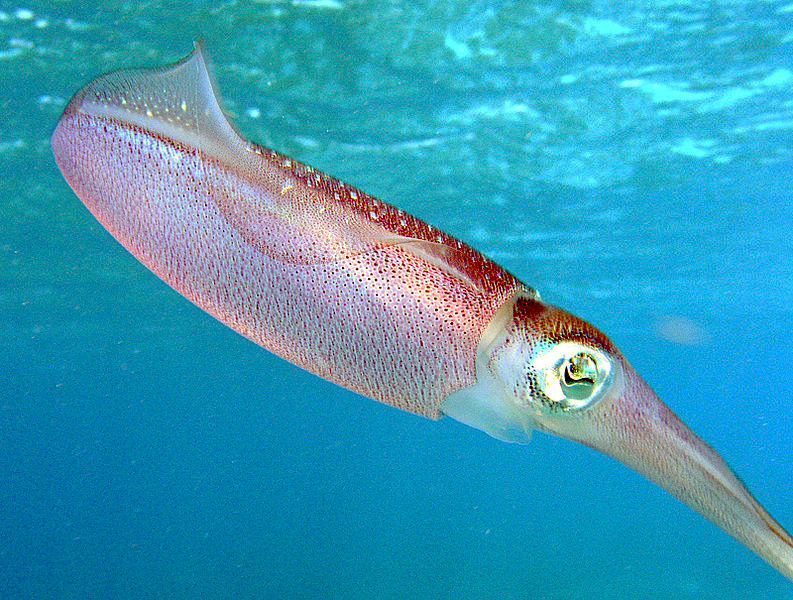
fig. 1 Caribbean Reef Squid. Photo in the Public Domain


I went snorkeling yesterday with my hubby at Secret Harbor on the East End and one of the many forms of sea life I saw was the Caribbean Reef Squid (Sepioteuthis sepioidea). Now you may not have realized it yet, but I have a thing for invertebrates, so I was inspired to do this post. Plus, I had some groovy lab drawings from a squid dissection that I labeled on the compy for you. If you have any questions about the functions of any of the parts labeled, just let me know so that I can answer any questions for you. This is just the basics of this really alien and beautiful creature.

This squid is commonly found throughout the Caribbean and Floridian waters. They are usually found in shallow waters (1 meter or less) and are commonly seen in schools. I usually see between 5 and 15, but apparently will congregate in groups as large as 40. They are mollusks so, believe it or not, are related to the Queen Conch I posted about last week. Since they are further classified as cephalopods, they are more closely related to octopuses, cuttlefish, nautiluses and more. They are quite pretty and many time I have seen them flash colors at each other or in time. They are very colorful, almost iridescent creatures. The speed of color change in them is quite fast as well. In fact, they can change color much faster than a chameleon.

They swim (or hover) using the fins (click image below for larger view) on the sides of the mantle. If they need to get away quickly, they use a form of jet propulsion. If they still can't get away, they ink.

When they aren't hovering, they eat. They eat a lot. The Caribbean Reef Squid, like most squid can consume almost 50% their body weight in food a day. They are carnivores and eat a variety of prey including crustaceans, small fish, and even other mollusks.

fig 2. exterior of squid

One of the things that makes squid and cephalopods so interesting to study is their fantastic sight. The reason they are so studied is they are not even close to being related to vertebrates, yet process images similar to us. This means that their sight and eyes evoloved independently. The main differences are the ammount of visual pigment. They usually have one, we have three. They pretty much only see in greyscale, which is suprising considering the amazing display of colors they put on for us! There is one exception, however, but we won't complicate things. You can learn more about the coevolution and how their eyes work here.

fig 3. internal anatomy of male squid

Squid are know to be "weed like" in how they grow and reproduce. There are only about 800 species but in terms of production can keep up with fish. This makes fish an incaluable resource globally. The common market squid in Southern California (Loligo opalescens) alone is responsible for about $20 million in revenue a year. That is just the fishery side as well. That does not include uses for its ink, the money made in restaurants that sell it, or the money made from bait and tackle, etc. Due to its fast rate of reproduction, it is alsoconsidered one of the more sustainable types of seafood you could eat. Many questions have yet to be answered though. We don't know where many of these species spawn and just how many are out there. There was a great article published that attempts to show the effects of squid fishereies.

Besides all the info I just gave you, did I mention that they are awesome to swim with? I've only seen them at a few beaches here and absolutely everytime I see them, it's mesmerizing.

I hope you enjoyed my sketches. Happy learning!


Read more...

Warm Water and Other Wet News

>> Friday, July 17, 2009

First in watery news this week, NOAA reports that this past June was the warmest on record for every hemisphere. The ocean surface water temperatures were between 1.1 and 1.2 degrees warmer (in Fahrenheit) above the norms recorded since 1880. According to the NOAA website:

Each hemisphere broke its June record for warmest ocean surface temperature. In the Northern Hemisphere, the warm anomaly of 1.17 degrees F (0.65 degree C) surpassed the previous record of 1.12 degrees F (0.62 degree C), set in 2005. The Southern Hemisphere’s increase of 0.99 degree F (0.55 degree C) exceeded the old record of 0.92 degree F (0.51 degree C), set in 1998.
What can we do about this? I could go into a list, but as so many things are involved, it is best for us to simply be aware of what is going on.

Up next we have the story of a favorite of many, the sea turtles. While there are many different species of sea turtles from hawksbill to leatherback, to green, loggerhead... they are all in need of some support right now. According to a 20 page report published by Oceana and their group of marine scientists, "770 sea turtles are
caught annually in Mid-Atlantic
bottom trawl fisheries." Add this to the already diminishing number of turtles (6 of 7 species here are endangered) and fewer nesting females and you have a sad dilemma. What can you do? There are little and big things you can do and you can find out more at Oceana and NWF. The original article is published here. The little guy to the right is a green turtle Chelonia mydas.

Lastly, on a lighter note (I did not realize how depressing my article choices were), a beluga whale that had been swimming up and around a river in Canada finally made it out of the river and back into the Northumberland Strait. The whale showed up at the end of June and scientist doubted that it could be a beluga as they are rarely seen in that part of the world. Adding to this doubt was the fact that belugas usually travel in pods and this one was solitary. It was, in fact, a beluga, and now it's headed back out to sea. So cute!

Thanks for reading and please remember, when enjoying a day near or on the water, take your trash with you. Simple little things like this can really make a difference.


Read more...

Surf's up.

>> Tuesday, March 24, 2009

Two posts in one day? I must be batty. Yay mobile posting! The hubs is going surfing while I paint on hull bay... Not too bad for my day off!

Read more...

More Fantastical Ocean Discoveries

>> Friday, March 6, 2009

NOAA (National Oceanic and Atmospheric Administration) found new deep sea corals. In fact, they found seven new species while on a mission at Papahānaumokuākea Marine National Monument. Six of them may be entirely new genera.

The discovery is very exciting because corals of any kind have the tendency to be the basis fore any marine ecosystem. They are also the first ones affected by ocean acidification. Since these bamboo coral produce growth rings like trees, they can tell us a lot about conditions on the ocean floor and how they change.

Also among the discoveries were new coral beds and a large sponge dubbed the "cauldron sponge." It was about one meter across and tall. Other sponges were discovered as well and may also represent new genera. There were also coral graveyards found with dead coral of a variety that had never been documented in Hawaii before.

Papahānaumokuākea Marine National Monument is very studied because it is the largest preserve (US Protected) of ocean floor that is below SCUBA depth. 98% of it is "deep water" and must be reached by submersibles. This is an exciting year for deep sea discoveries and it's only March!

Photo courtesy of NOAA.

Read more...

A Transparent Noggin

>> Tuesday, February 24, 2009


So recently the people at the Monterey Bay Aquarium think they have solved the mystery of a very peculiar fish. This fish is commonly called the barreleye (Macropinna microstoma) and has some peculiar adaptations for life in the deep. The fish was first described in 1939. It has, since that time, been assumed that it's tubular eyes were very adept at collecting light. What they didn't know was that the eyes moved. It was believed that the fish had "tunnel vision" and could only see a set area right above its head.


The two spots above the mouth are actually the fish's nostrils. It was thought that the eyes enclosed in its transparent dome could only look upward. Recently, however, researchers with Monterey Bay used ROVs (remotely operated vehicles) to film these creatures in the wild. In the video you can see the eyes rotate quite a bit. It also appears that these fish steal their food from siphonophores floating by with food trapped in their tentacles. Siphonophores, by the way are Cnidarians (pronounced nye-DAIR-ians) and are related to corals and jellyfish. These creatures trap animals in very long tentacles and consume them similar to jellies. The barreleye sees the trapped food and then swwops in for the steal.

The "sheild" around the eyes is also a new discovery. Up until this video, any specimens found had no sheild. This was probably due to damage on the way up from the deep . This is evident in the following illustration from the Canadian Museum of Nature.

As you can see, it looks a bit different from the same fish studied alive using the ROVs.
They also discovered how the fish swims. Using its amazing flat fins, they can almost hover in place. They can also manuever quite well. To find out more, read the press release here.


Read more...

Ocean Acidification

>> Thursday, February 5, 2009

The threat of ocean acidification is getting some attention recently. Many marine scientists (more than 150) from all over the world are asking policy-makers to take this threat very seriously and find a way to reduce CO2 emissions. According to these scientists, the acidification is already detectable and is rapidly accelerating. How does CO2 in the atmosphere cause ocean acidification?

The ocean absorbs a lot of the gas and it is dissolved and converted to carbonic acid. According to Oceana, this acid destroys many shells and layers on animals that are key to ecosystem survival. The acid breaks down these calcium carbonate shells.

Not only does the CO2 affect animals with calcium carbonate shells, but animals like squid that require a lot of oxygen will not be able to absorb as much. Acidity in the ocean also affects the squid’s blood acidity.

The oceans pH has already dropped from 8.16 to 8.05 since the late 1980’s. There is some evidence that this drastic change in pH will also hamper the development of various marine larvae.

What can you do to help? Besides lowering the amount of CO2 you personally produce, you can write policy makers. Let people know. Talk to others about how lovely the ocean is. Remind them how important it is and how much of our oxygen comes from the ocean.

Off my little soapbox. Sorry. I get carried away.

You can find the source here.


Read more...

New Deep Sea Species

>> Saturday, January 24, 2009

In National Geographic, there was an article showing three new deep sea species that they have found. This one is my favorite.

It looks like some strange breathing apparatus or something. Apparently it is a sea squirt living 4006 meters underwater. It was about 20 inches long and was found to be carnivorous. The funnel is used to trap small fish and other things. This is strange because other ascidians (sea squirts) we are familiar with simply siphon plankton from the water as filter feeders.

This strange creature, and more, were found off the coast of Tasmania in the Tasmania Fracture Zone. You can read the rest of the article and see the original picture here.


Read more...

Gift of Plenty: Aquaculture News

>> Monday, January 5, 2009


We all know the world's oceans are of great importance, but there were two articles that caught my attention today while carousing the web.

One article from Science Daily was about how marine algae can be used as a new source of biofuel. Since oil seems to be on everyone's minds these days, it is no wonder scientists are looking elsewhere for our fuel needs. The research I am speaking of was conducted at Scripps Institution of Oceanography at UC San Diego. This is an enormous undertaking and as was written in Science Daily:

The prospect of squeezing billions of gallons of biofuel oil from marine algae is enticing, but to transform tiny lime-green-colored plant-like organisms into a viable and realistic fuel option, they must be tested and grown on a massive scale. Intermediate-sized, and eventually immense, algae production sites will be required to produce an economically relevant quantity of algae-based oil for biodiesel fuel in cars, trucks, and airplanes.
However, this is still a step in the right direction.

Another article about our worlds oceans was actually about the future of aquaculture and is from Biology News. In it, scientists and experts speculate that aquaculture will be the fastest growing food production system. Experts state that even though there are some potentially harmful effects of aquaculture, when implemented properly, fish farms can greatly lower the impact on over exploited wild caught. One tidbit that I found fascinating:
Finfish, mollusks, and crustaceans dominate aquaculture production; seafood exports generate more money for developing countries than meat, coffee, tea, bananas, and rice combined.

We really should take care of our "breadbaskets." Sure there is the aesthetic quality, but there is so much more at stake than that.

Read more...

Sunday is SUN DAY

>> Sunday, October 5, 2008

I went to Coki Beach today and wanted to share a bit of my favorite pictures from times past at this lovely beach. But first...

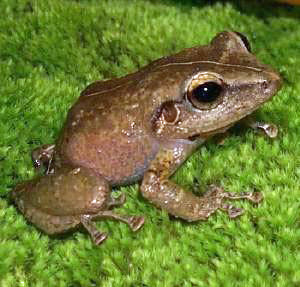
A story behind the locale... Coki Point (spelled Koki also) is named after cute little Coki (Coqui) frogs (Eleutherodactylus spp.) that are common to this and neighboring islands. They are tiny little frogs, called such because of their nighttime song, co-KI co-KI, that fills the night air, especially on this point. These frogs are PLASTERED all over any Puerto Rican souvenirs you may get. I love the sound they make.

They have recently been introduced to Hawai'i as an invasive species. Hawai'ians do NOT like these little frogs as much as we do. They were introduced on hibiscus plants that were shipped to Hawai'i from nurseries in Puerto Rico. Apparently, there are not enough hibiscus plants there, so they get them from this part of the world.

There are TONS of species of Coqui frogs. You can get more info here. Now, on to pictures from 3 birthdays ago when the mother figure came to visit. I love my mom!


This is my cousin in front of the beautiful sapphire water at this beach. Note: the pictures were not touched up. The water IS that blue here.


This is me and Mom (Mom's on the left) snorkeling in front of the now quite famous observatory at Coral World. I am so proud of my mother. She had never gone snorkeling before and we were in about 25 feet of water. Yay mom!


Okay. That is all you get. No more pictures! HA! That is just to make you want to come and visit... nah, really, my internet is being slow today. I'm on satellite so it happens sometimes.


Photo of Eleutherodactylus coqui courtesy of Wikimedia Commons.

All the rest are by me and the hubs... some years ago.


Read more...

Some Photography

>> Friday, September 19, 2008


At the gentle nudging of SeaLaura, I am posting some pictures to submit to the weekly "Thematic Photographic" over at Written, Inc.'s blog. This weeks theme is nature so I am pulling out some of my faves...

First up is a lake in the Tetons on the Wyoming side... I can't get over this view. The clouds were amazing that day and really is one of my favorite pictures of that location. This was over 3 years ago.

Next is some of my favorite reef in Lerkenlund. This was an amazing bait fish experience. They were all making highways around this coral head. Blew me away. I know SeaLaura wanted me to post an iguana pict for this, but I have a few more that I want to share with you guys later! I hope you have enjoyed my asides today.


Creative Commons License
Thematic Photographic: Nature by Marizela Moya is licensed under a Creative Commons Attribution-Noncommercial-No Derivative Works 3.0 United States License.

Read more...

About St. Thomas

>> Friday, July 11, 2008

In case you haven't figured it out, I live in St. Thomas, VI. We are a part of the United States just located in the Caribbean. The Caribbean (for all us science types) is a tectonic plate all its own and the collision and interaction of this little plate with other larger ones is how the Antilles were formed. Because our islands with the rest of the ones in the Caribbean form a chain that acts as a barrier for the fierce Atlantic, the Caribbean Sea is calm and tranquil pretty much consistently.


View from Annaburg Plantation, St. John. Copyright 2007 M. Moya


Pretty, I know. It's not just the scenery that is nice, or the trade winds that keep the temperature mild. Below the surface is a bunch of really beautiful reef. The reefs in the Caribbean are predominately 70 different species of reef building coral, a ton of sponges, crustaceans (think crab and shrimp), mollusks (think escargot and clams)and various other invertebrates. They are also home to hundreds upon hundreds of species of fish, turtles, and other chordates (more on that some other time).


Reef, Gorgonian, and Bait Fish Highway. Lerkenlund, St. Thomas. Copyright 2006 M. Moya.


On land we have some interesting critters as well. About 2,000 species of bug and insects (that includes really pretty butterflies and amazing rhinoceros beetles) also call St. Thomas home as do numerous other types of animals like wild donkeys, deer, boar (although not so much on St. Thomas as St. John now-a-days), iguana, birds a plenty, bats, mongoose, snakes, chickens (they deserve a separate listing than birds) and lots of other fauna.


Iguana in Papaya Tree. Bonne Resolution, St. Thomas. Copyright 2006 M. Moya.


With all this we are still having our problems. Due to over development (living here seems to be prime real estate), our native plants are disappearing and animal habitat is all but gone in places. The snakes are all but gone, we are having a heck of a time breeding the local butterflies as most of the host plants are being removed, the parrots aren't coming back like they should... the list goes on. With all the beautiful scenery and natural environments, it's a shame we can't focus our tourism around this a bit more. Granted there are lots of dive spots, but what of our mangroves and tropical dry forest? What of the gallery forests in out "guts" (guts are temporary waterfalls where freshwater drains off the bedrock)? I think people would want to see this. Maybe it's just me.
Me and my doggy on the beach at Lerkenlund. Copyright 2006 M. Moya.


I enjoy finding the few place left here that haven't been developed, where the runoff from the building hasn't destroyed the reefs, the parrots still sing, and the mangroves are uninterrupted. I love it here, and I think everyone who comes here on vacation should support eco-tourism and the University, so our local government can see what people really enjoy is the pristine.


Creative Commons License
All Photos by Marizela Moya are licensed under a Creative Commons Attribution-Share Alike 3.0 United States License.

Read more...

Ice Caps are Melting

>> Thursday, June 19, 2008

In another article I found on my very-quickly-becoming-favorite news source, the BBC, they mention how quickly the icecaps are melting. Some people write this off as "hey, it happens." The warm before the ice age if you will. What do you think? Is this just naive, or are we speeding up nature's normal cycle? I have lots of information on the latter because there is no published data (read: scientific peer review articles) that denounces global warming, but feel free to tell me what you think. I would love to argue both sides of this!

Read more...
Related Posts with Thumbnails
WARD'S is a one stop online store for science education.
CommentLuv Enabled Charles Darwin Has A Posse Science Blogs - Blog Catalog Blog Directory Blog Directory by Blog Flux

  © Blogger templates Palm by Ourblogtemplates.com 2008

Back to TOP