JS-Kit Comments

Showing posts with label Biodiversity. Show all posts

New Mammals Discovered

>> Tuesday, June 21, 2011


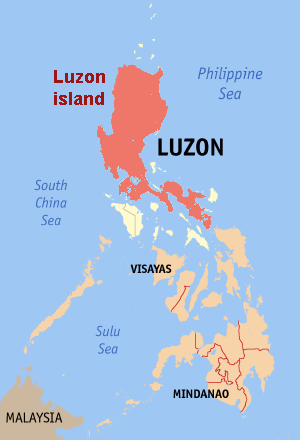
Here we are: in the Philippines, again. Luzon, again. Like last time, we are finding more critters, too! This time, seven species of mammal. Mice. All very genetically different; some only found on ONE mountain. This increased the number of known mammals (excluding bats) from 42 to 49. They increased mammalian integration by 17%!

Where were these mice all this time? Apparently they are very shy and liked to hide. They aren't pests and prefer to eat earthworms and bugs and seeds.

A Dr. Scott Steppan, head of one of the labs conduction the DNA part of the survey, said,
"The Philippines is an ideal place to study the evolution of animal diversity, even better than the famous Galapagos Islands. These animals have been evolving in the Philippine archipelago for millions of years."
Do you think we, as humans, have made the mistake of assuming a place like Panama is a biodiversity hotspot because it actually is, or is it because that is where everyone does research?

Read more...

2010: Year of Biodiversity

>> Sunday, January 10, 2010

As the new year takes off running, we also have a new something to celebrate. If you all recall, last year was Year of the Gorilla. This year has been declared by UN as the Year of Biodiversity. This is rather exciting for me since I am all about biodiversity and how things rely on each other. One of the first posts I ever did on Potspoon! was about it as well.

fig 1. a swamp biome

The official Year of Biodiversity site is up and running. Like with the gorillas, I will do various posts throughout the year and make a header link for this topic.

They list four reasons why this is the year of biodiversity but the first one stuck out the most: human's are a part of the earth's diversity and we are the ones who can protect or destroy it. On the site you will even find an interactive map with the locations of events around the world. So say your last goodbyes to the Year of the Gorilla and welcome in the Year of Biodiversity.

To find out more, click the links above or go to the United Nations Environmental Programme website.


Read more...

About St. Thomas

>> Friday, July 11, 2008

In case you haven't figured it out, I live in St. Thomas, VI. We are a part of the United States just located in the Caribbean. The Caribbean (for all us science types) is a tectonic plate all its own and the collision and interaction of this little plate with other larger ones is how the Antilles were formed. Because our islands with the rest of the ones in the Caribbean form a chain that acts as a barrier for the fierce Atlantic, the Caribbean Sea is calm and tranquil pretty much consistently.


View from Annaburg Plantation, St. John. Copyright 2007 M. Moya


Pretty, I know. It's not just the scenery that is nice, or the trade winds that keep the temperature mild. Below the surface is a bunch of really beautiful reef. The reefs in the Caribbean are predominately 70 different species of reef building coral, a ton of sponges, crustaceans (think crab and shrimp), mollusks (think escargot and clams)and various other invertebrates. They are also home to hundreds upon hundreds of species of fish, turtles, and other chordates (more on that some other time).


Reef, Gorgonian, and Bait Fish Highway. Lerkenlund, St. Thomas. Copyright 2006 M. Moya.


On land we have some interesting critters as well. About 2,000 species of bug and insects (that includes really pretty butterflies and amazing rhinoceros beetles) also call St. Thomas home as do numerous other types of animals like wild donkeys, deer, boar (although not so much on St. Thomas as St. John now-a-days), iguana, birds a plenty, bats, mongoose, snakes, chickens (they deserve a separate listing than birds) and lots of other fauna.


Iguana in Papaya Tree. Bonne Resolution, St. Thomas. Copyright 2006 M. Moya.


With all this we are still having our problems. Due to over development (living here seems to be prime real estate), our native plants are disappearing and animal habitat is all but gone in places. The snakes are all but gone, we are having a heck of a time breeding the local butterflies as most of the host plants are being removed, the parrots aren't coming back like they should... the list goes on. With all the beautiful scenery and natural environments, it's a shame we can't focus our tourism around this a bit more. Granted there are lots of dive spots, but what of our mangroves and tropical dry forest? What of the gallery forests in out "guts" (guts are temporary waterfalls where freshwater drains off the bedrock)? I think people would want to see this. Maybe it's just me.
Me and my doggy on the beach at Lerkenlund. Copyright 2006 M. Moya.


I enjoy finding the few place left here that haven't been developed, where the runoff from the building hasn't destroyed the reefs, the parrots still sing, and the mangroves are uninterrupted. I love it here, and I think everyone who comes here on vacation should support eco-tourism and the University, so our local government can see what people really enjoy is the pristine.


Creative Commons License
All Photos by Marizela Moya are licensed under a Creative Commons Attribution-Share Alike 3.0 United States License.

Read more...

Biodiversity continued...

>> Saturday, May 24, 2008

Many of the terms that were thrown around in the first post about biodiversity may have been a bit hard to understand. This post is going to break down the terminology used in ecology. So, in a way I guess this is more of an ecology post not a biodiversity post, I'm just cross referencing! Hopefully, this will lead to less confusion... not more.

So, starting at the broad and bringing it in a bit we will start with ecology: what is it and what do ecologists do all day? Well, ecology is— in the simplest of terms— the study of the relationships of organisms and their environments. I hope I'm not plagiarizing anyone there, but that is pretty much it. Now this includes all the relationships in an organisms environment: interactions with other organisms in the same species, other animals, plants, climactic changes, bacterium... all these interactions are what ecologists study.

There are a few different types of relationships that pretty much cover the bases of all the interactions. Relationships come in the following categories:

Mutualism- both sides of the relationship gain something
Commensalism- benefit for one and no effect on the other
Predation- this covers herbivory and parasitism as well. It is a gain for one and a loss for the other
Amensalism- negative for one and neutral for the other
Competition- negative for both parties
Neutralism- just what it sounds like— no effect on either

By studying these relationships you are also studying populations, genetics, global patterns, different biomes and more. As an ecologist, one must be a bit of a zoologist, botanist, geneticist, statistician, and writer. Not exactly an easy task.

I hope this gives everyone a better understanding of what ecology is. I will continue this series every now and again by breaking things up into pretty simple terminology (I hope). If you have any questions or want to know about a certain area of study (any topic is ok) just let us know!

If you want to find out more about ecology, there are tons of textbooks out there, but one I found really easy to follow was Ecology: concepts and applications by Manuel C. Molles, Jr.

Read more...

The Amazon Paradox: A BBC Special

>> Thursday, May 15, 2008

I am not affiliated with the BBC in any way, but I wanted to share this story with you guys. It shows both sides of the Amazon logging industry. It's not just a bunch of rich American paper companies. Many tribes in the Amazon rely on this industry. I am still anti-mass-logging and believe there are other ways of helping out indigenous peoples, like using them as tour guides or something! I thought it pointed out a lot of interesting information though.

This article goes into a bit more detail about the plight of Brazil's people and the plight of Brazil's rain forest. The Amazon is huge and extends through 9 countries. Also, it is home to an amazing 25% of the worlds terrestrial species. It is a huge representation of the biodiversity found in rain forests. While I am a bleeding heart for wanting to help people, I am more of a bleeding heart when it comes to preserving our ecosystems and natural habitats. Like the old adage goes, "We do not inherit the earth from our fathers, we are borrowing it from our children."

Read more...

A bit about biodiversity

>> Tuesday, May 13, 2008

First things first, I am apologizing for the horrible quality of the first video. I made it small so I could up load it easier and didn't realize so much of the quality of the original would be lost. I promise to update the video soon to a better quality. Also, I plan on doing these about once a week or bi weekly, so keep checking for new ones. Don't worry though, there will be lots of other content I will include on here as well. It will only be this way for a while (I hope) as I get better with the film editing equipment, the videos may be more frequent.

Now, on to the topic!


Biodiversity is a term that seems to be thrown around quite a bit, but what does it mean? Well, it can mean all the speciation in an area, an ecosystem, a certain biome, or even the entire earth. for example, my house (area) does not have a lot of biodiversity compared to St. Thomas' dry forests (biome), but the biodiversity increases a bit up Crown Mountain, the mountain I live on, due to a pocket of moisture that occurs crating a unique ecosystem. Now that I have you thoroughly confused, I will break that down a bit more.


Okay, biomes are not to be confused with ecosystems. A biome is an area of ecologically similar ecosystems (think communities of organisms) that is climatically and geographically defined. There are a few factors that go into determining a biome. On the climate side, it's limited to humidity, altitude, and latitude. For example: Tropical (latitude) Rain forest (humidity) is a biome. If you took down some of that forest to build a resort, the area around that resort plus the resort is an ecosystem. In ecosystems you include abiotic factors as well (think buildings, fences and man's interventions).

This is a tropical rain forest. The whole of it is a biome.


If you were studying the specific animals and plants
around this waterfall, you would be studying an
ecosystem within the biome!


Hopefully, everyone understood that! You are now officially on your way to become expert ecologists... well, at least well versed enough in science that people will think you're smart and so interesting to talk to at the next social event.

By the way all these pictures are Copyright to me under Creative Commons. You can use them, just give me credit somewhere please!

Read more...
Related Posts with Thumbnails
WARD'S is a one stop online store for science education.
CommentLuv Enabled Charles Darwin Has A Posse Science Blogs - Blog Catalog Blog Directory Blog Directory by Blog Flux

  © Blogger templates Palm by Ourblogtemplates.com 2008

Back to TOP