Don't forget...
>> Saturday, July 25, 2009
I am only doing science related posts on Potspoon! now so if you crave random posts about Floyd, island life, or whatever, make sure you check out Roogoodoo. Have a happy weekend!


I am only doing science related posts on Potspoon! now so if you crave random posts about Floyd, island life, or whatever, make sure you check out Roogoodoo. Have a happy weekend!
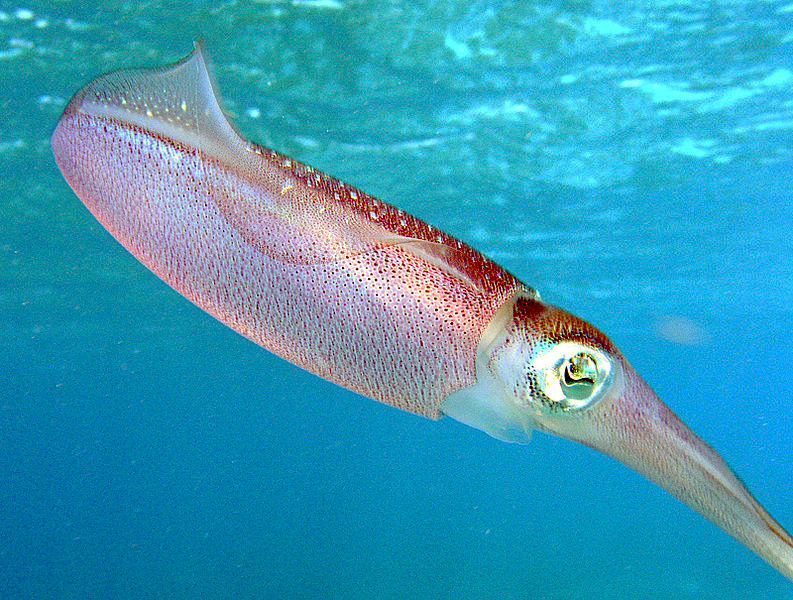 fig. 1 Caribbean Reef Squid. Photo in the Public Domain
 fig 2. exterior of squid
 fig 3. internal anatomy of male squid
Well, kiddies, it's that time of year again. The Open Laboratory is accepting submissions. If you don't remember, I wrote about it last year. That is your hint to go look at an old post. The great thing about it is YOU get to help decide who gets published in this book. They take submissions of what you think is the greatest science writing on the web.
So click on the button above... you know you want to... and submit your favorite articles written since December 1st, 2008 that are about science. They can be essays, cartoons, art, poems, whatever! You can find out more here and see the 220+ submissions so far here.
What are you waiting for? Go submit something!
 Coltan is something you may not have heard of. This is surprising because it is around you more than you think. It is a metallic or used in the production of capacitors... primarily the kind used in cell phones, video game systems, and laptops. Coltan is mined by hand in the Democratic Republic of Congo. If you remember some of my other posts, this is where many of the protected gorillas live. In fact, the mines are located in rebel-controlled areas in the National Parks. Not only that, but coltan is in incredibly high demand as we get more connected as a global market, making it valuable to both sides of the fight occurring in DRC. Some organizations and analysts have even gone so far as to state that coltan is at the center of this conflict because, besides being an ethnic war, it is also a war over resources.
Since the conflict began in 1998, many farmers were pushed off their land and sought jobs in the mines. In order to access more of the mines, they have gotten rid of valuable habitat and have killed off African elephants and eastern lowland gorillas. Both are protected species, but with a lack of serious funding and visibility in the media, there is only so much the park rangers can do. There is, however, something WE can do.
When many people get new cell phones or new electronics, they simply throw the old one away.Most people don't realize that many of the electronic devices are recyclable or reusable. Many companies will refurbish older units for resale or actually break down the pieces into it's components and use the raw materials in making something new. The EPA has an entire section of their site devoted to recycling electronics.
Many of the cell phone companies will simply take any old phones and parts. Big chain stores like Staples and Best Buy also have electronics recycling. If you don't have any of those around, call your local waste management. Chances are, they have an electronics collection program.
If we can reduce the demand for coltan, we can reduce the impact that its mining has had on some really amazing creatures.
You can find out more about coltan here.
Picture of the gorilla by nailbender on Flickr and is licensed under Creative Commons.
Remember, you can find out more about gorillas by click the link at the top of the page or by visiting Year of the Gorilla.
First in watery news this week, NOAA reports that this past June was the warmest on record for every hemisphere. The ocean surface water temperatures were between 1.1 and 1.2 degrees warmer (in Fahrenheit) above the norms recorded since 1880. According to the NOAA website:
Each hemisphere broke its June record for warmest ocean surface temperature. In the Northern Hemisphere, the warm anomaly of 1.17 degrees F (0.65 degree C) surpassed the previous record of 1.12 degrees F (0.62 degree C), set in 2005. The Southern Hemisphere’s increase of 0.99 degree F (0.55 degree C) exceeded the old record of 0.92 degree F (0.51 degree C), set in 1998.What can we do about this? I could go into a list, but as so many things are involved, it is best for us to simply be aware of what is going on.
 caught annually in Mid-Atlantic
In island talk it means a mess of things or a jumble. Like stupid people doing dumb things at the traffic light to make the traffic worse. Roogoodoo. Like ridiculous drama that you have nothing to do with cause you are just minding your own business enjoying the live music and someone's drink ends up in your lap. Roogoodoo.
So what is the point of this lesson in West Indian vernacular? I started another blog... yes yes say what you will... I think Potspoon! needs to stay more science oriented, but I like other things so I am going to use the other site as a catch all. Posts about what I do for fun. Posts about art. Posts about my mood swings. Whatever. I just know it needs to be that way. A lot of nonsense; hence, roogoodoo. Besides, the name goes with the theme of West Indies terminology as my blog title! Should be interesting anyway. That way, you can still get the Floyd pictures that are so popular with out the science or get all the science you want with out the Floyd pictures. :D
K, bye!

I put a desktop picture up I found in our underwater photo archives and it's so cute, I decided to do a post on it. Previously known as Strombus gigas and now Eustrombus gigas, it is commonly known as the Queen Conch (pronounced konk) and is the species I will be talking about today.
Conchs are gastropods and means they are closely related to snails and a little more distantly related to squid as squid are mollusks as well. Here in St. Thomas, they can be found in shallow (less than 10 meters) water with sandy substrate mixed with a lot of Thalassia testudinum also known as turtle grass. Yes, it is called turtle grass for a reason and we will save that for another day. I go conching here (not to harvest, but for research) at Brewers Bay by the university. You can see in the picture provided, this guy is hanging out in sand and grass. For more fun, if you click on it, you will see his eyes poking out. Super cute. Anyway...
Most people that know anything about conch know that they will "attack" you. It's sort of true. You see, conch, like many gastropods, have an operculum. This is simply a covering at the bottom of his foot that seals the shell closed. If you have ever looked at marine snails or whelk, you will have seen this. In the conch it is particularly long and claw like. They will use it at times.
Another feature of their anatomy, and arguably the most dominant, are their spiraled shells. Many people are familiar with conch shell horns and the like. They are quite beautifully pink on the inside and are prized by shell collectors. Conchs also produce pink pearls that are very collected.
Locally, they are prized for their meat. We have conch fritters, conch stew, buttered conch and more. It is quite tender and yummy. However, this beautifully shelled animal is threatened. Illegal harvesting has devastated the population of conch in our waters. They are protected in Florida and in the Virgin Islands are harvested only certain times of year and must be a certain size. "Lip-less" conchs cannot be harvested as they are still juvenile. The rules are as follows:A quota of 50,000 lbs per year. After the quota is reached, the fishery will remain closed until November 1st of the following year. A limit of 200 conch per boat for licensed commercial fishermen. A limit of 6 Conch per person for recreational fishermen and a total of 24 conch per boat. A closed season from July 1 until October 30. All conch must be landed alive and in the shell. No conchs may be possessed which are less than nine inches in length or less than 3/8 inch lip thickness. Fishermen must report their landings monthly to the Division of Fish and Wildlife.
Also keep in mind that there are times of year to harvest them. If we don't keep track on what we are doing now, we may not have them to enjoy in the future. They are already in serious decline and that is why these regulation are in place here. In Florida, they are considered threatened now and harvesting is prohibited in the majority of US waters. Even if you see an empty shell, try not to remove it as many species of marine hermit crab use these shells as well. I have reported illegal conching and it is quite easy. Remember, in the continental United States, harvesting is illegal. you can contact any natural resources division in your state. If you are in the USVI you can call DPNR at (340) 774-3320 in St. Thomas and (340) 773-1082 in St. Croix.
You can find out more at NOAA and at your local DPNR website.
Book used as reference:
I found this lovely quote the other day and I figured I would share it. Since I was mentioning conservation earlier in the week, I thought it appropriate.
The earth we abuse and the living things we kill will, in the end, take their revenge; for in exploiting their presence we are diminishing our future. ~Marya Mannes, More in Anger, 1958
Current treatments are evaluated on whether the patients' symptoms improve over several months. Csernansky, however, wants to take a longer and broader view. "What we want to know is whether a few years later are you more able to work, are you better able to return to school?" he said. "If you take these medicines for years at a time, is your life better than if you had not taken them? We want to understand the effects of the medicines we give on the biological progression of the disease. We think that's what ultimately determines how well someone does." Psychotic and mood disorders are life-long illnesses and require management throughout a person's life. The implications that this could possibly allow people to get an early diagnosis and live out successful lives with complete functionality is very important to me. You can read more here.
A certain John Csernansky, M.D., has found that mapping certain areas of the brain and determining where the peaks and dips are located can aid in the early determination of certain mental disorders. This is very important because, like other diseases, it is in the earliest phases that they are most treatable. However, due to the nature of the disorders, they are sometimes hard to properly diagnose and treat until much later on in life. Treatment usually comes when a person is no longer functioning properly and the disorder disrupts his or her everyday life.
Unlike diabetes, for example, you cannot just do blood work and determine things. Psychiatrists only have what the patient gives as symptoms to determine things. It would be like determining lymphatic cancer by you describing a sore neck. Needless to say, this is a substantial finding for the many of us who suffer from mental illness and know what they entail.
According to the article at ScienceDaily:
Photo of brain from National Institutes of Health and is in Public Domain.
On a lighter note, don't forget to vote in my poll. I need all the help I can get.
Okay, so I worked out most of the glitches on the site that prevented it from loading properly on IE. I also changed a few things with the commenting. You may notice the "commentluv" box. That is to post a link to your most recent entry below your comment. We'll see how it works out. I have seen it used on other sites and really liked it, but you can let me know either way. Now on to more pressing matters... I'm stuck again and am asking for your help! I want to know what colors I should go with (again) for my blog layout. I fugured what I like only matters partially as you guys are the ones that support me by reading it. You are the one that has to look at it. So now on to the poll.
I am doing some revamping today. Working out some of the glitches with commenting and such.

It seems everywhere you look these days, someone is touting a new easy way to be green. These pushes to be green seem to crop up once every 15 years or so. Just think back to the early 90's when Captain Planet ruled the airwaves and everyone wanted to be an eco-warrior. I even had a Little Archie comic where he started recycling at his school and roller-bladed as many places as he could. McDonald's gave out tree seedlings with their meals. I got paid for my cans. Then it disappeared for a bit it seemed.
There were those of us that never backed down from being "tree-huggers" but most everyone else dropped it like it was a passing trend. This green trend, probably to do with the plethora of information (and misinformation) at our fingertips, seems to be taking a stronger hold.
While many people seem to really want to make a difference, there are still lots of people that feel that certain things are more of a headache than it's worth. Remembering to carry extra bags to the store is something everyone tries to do and most fail at. A clip on bag helps. Buying 100% recycled toilet paper is a little more expensive and a bit unrealistic during these hard economic times. Contributing to the WWF or the NWF is not an option for those pinching pennies.
Besides this, there are the actual impacts of what some supposed "green" ideas actually have on the environment. Certain things which save trees, like online bill pay, seem like an easy way to be green and you do save a lot of trees, but using the internet does leave a carbon footprint. Google was very upfront about how much energy their searches consume, but look at the numbers and think of how many thousands of searches you have done. It's not much, but it adds up quickly. So what can you do about that?
I am not saying throw your computer out by ANY means... I practically live on mine... but there are options. Love Google? Try Blackle. Same Google search power, just dark. Believe it or not, having a black website saves energy. It is SUPER negligible, but again, when there are literally millions of searches a second going on, it adds up pretty fast.
Another green idea that seems to be a bit misguided are green rallies. I am all for getting people together to educate. I love that sort of thing. But come on guys. Paper flyers everywhere, disposable goods... honestly, the amount of trash produced is a bit ironic. Keep it small. It's more intimate and usually makes more of an impact.
Recycling has it's merits as well, but be warned: just because it seems recyclable doesn't mean it is. While recycling is up over all, many people are required to sort through the recyclables to take out things you can't recycle but are in there anyway. There is also the economic view point of it not being very economically sound since the demand for recyclable materials is down. Shame. While this would deter most people (more and more work) there is hope. If it's greasy and food covered, throw it in your food waste. It will compost. Bills and the like, still recyclable.
So what is the point of this post? It is just to make you aware. Think about things. You may mean well, but may do some harm in the process. You shouldn't go green to brag about what you have done and get credit for it, it is a real lifestyle choice. You just should always know that EVERYTHING we do has an impact, and that is okay. Don't stress on it too much. A lot of the impact we do have when living green is something nature can work with and use for something else. It's a balance. It will work out. It's just nice knowing you did what you could. Every little bit DOES count and it adds up quickly.
I'm back in St. Thomas and got some computer time (WOOT!), but I will keep this short and sweet. It's all about agriculture.
There are sheep shrinking on a Scottish isle. Since 1985, the weight and stature of sheep on the isle of Hirta has declined 5%. What is causing this? Surprisingly, it's mild temperatures. Normally, with a grazing season longer than norm, one would assume that the sheep would be bigger and fatter, so what is the issue? Well, milder weather means the weaker and smaller sheep are surviving more, mixing in their genes. Also, with more surviving sheep, the smaller sheep are at an advantage if there is a food shortage since they won't have to eat as much. They are going through a period of natural selection.
Dairy is getting a lot of grief. I understand it. Mass dairy farming practices are a little gross, and the ammount of hormones used is outrageous. A lot of people think that dairy is bad for you. However, despite big farms' bad reputations, dairy itself is actually a healthy and cost effective way to get 9 super essential vitamins. You can find out more here.
The ADA (American Dietetic Association) did a study stating that if properly approached, a vegetarian diet can be healthy at any stage in life.
"Vegetarians tend to have a lower body mass index and lower overall cancer rates. Vegetarian diets tend to be lower in saturated fat and cholesterol and have higher levels of dietary fiber, magnesium and potassium, vitamins C and E, folate, carotenoids, flavonoids and other phytochemicals. These nutritional differences may explain some of the health advantages of those following a varied, balanced vegetarian diet."
You can find out more on the ADA website.
Sorry this was short. Be back later!
I cannot believe that is has been nearly a month since my last post. I feel like such a liar. I am currently visiting the hubs in St. Thomas, which is nice, and just trying to relax. I have worn myself out a bit, but am still here. Just to give you the heads up.


© Blogger templates Palm by Ourblogtemplates.com 2008
Back to TOP


